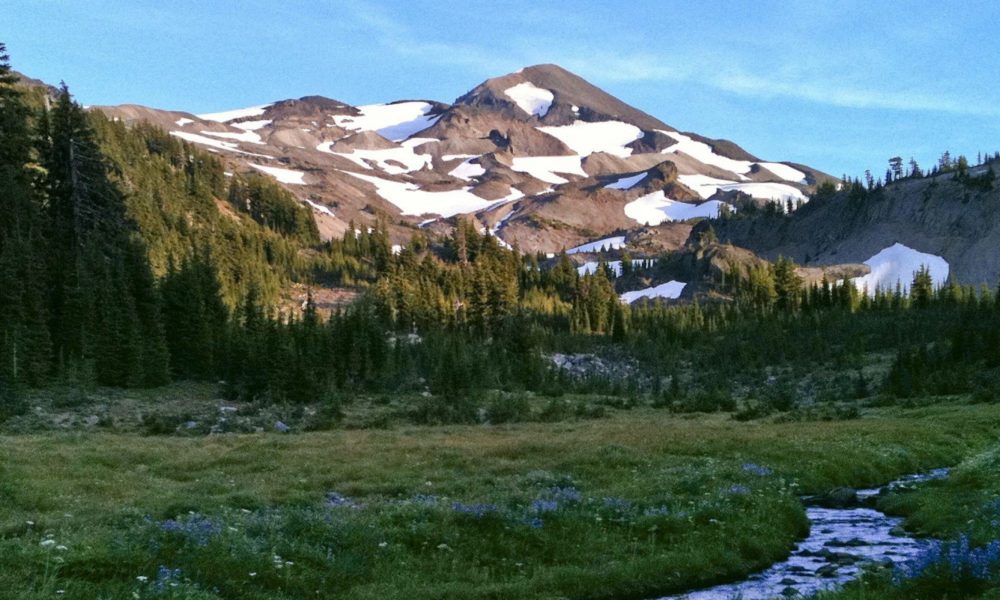


Oregon wildland fires are not one single type of event. They range from relatively low-intensity grass fires to fast-moving, high-intensity crown fires and large fires that threaten communities.
A useful way to understand Oregon wildfire risk is to look at three questions:
- What type of fire is burning?
- How severe is the fire behavior?
- What does the fire threaten?
The Major Types of Wildfires in Oregon


Ground fires
Ground fires burn organic material beneath the surface, such as roots, duff, peat, and decomposing vegetation.
They can:
- Burn slowly.
- Produce relatively little visible flame.
- Smolder for long periods.
- Damage tree roots.
- Reignite when conditions become favorable.
Ground fires can be difficult to detect and completely extinguish.
Surface fires
Surface fires burn fuels lying on or immediately above the ground.
Typical fuels include:
- Grass
- Needles
- Leaves
- Small branches
- Shrubs
- Dead vegetation
Surface fires can range from low-intensity burns to extremely fast-moving fires. They are common in both eastern Oregon grasslands and forest environments.
Understory or subcanopy fires
These fires burn shrubs, small trees, and vegetation beneath the forest canopy. They can become particularly dangerous when they connect surface fuels with the forest canopy.
Crown fires
Crown fires move through the tops of trees.
They can produce:
- Extremely high heat
- Rapid fire spread
- Large flame lengths
- Heavy smoke
- Long-distance ember transport
- Rapid changes in fire direction
Crown fire is generally associated with the most severe forest-fire behavior.
Oregon planning documents identify ground, surface, understory/subcanopy, and crown fires as four basic wildfire types, and a single wildfire can contain more than one type.
Wildland Fire vs. WUI Fire
There is another distinction that matters greatly for preparedness.
Wildland fire
The primary fuel is vegetation. Structures are absent or limited.
Examples include fires burning through:
- Forest
- Grassland
- Brush
- Rangeland
Wildland-Urban Interface fire
A WUI fire occurs where homes and other development meet or intermingle with wildland fuels. This creates a different problem. The fire is no longer just about controlling vegetation.
It can begin destroying:
- Homes
- Businesses
- Power infrastructure
- Roads
- Bridges
- Water systems
- Communications systems
Oregon identifies wildland fires and WUI fires as distinct hazards because structures and people dramatically change the consequences of a wildfire.
What Determines Wildfire Severity?
The size of a fire does not necessarily tell you how dangerous it is.
A relatively small fire can be extremely dangerous if it is moving rapidly toward homes.
Oregon’s wildfire-hazard modeling considers four major factors:
- Climate
- Topography
- Weather
- Vegetation/fuels
The state’s hazard modeling combines the likelihood of burning with modeled fire intensity.
Fuel
Fuel determines what the fire has available to burn.
Examples:
- Dry grass can support rapid surface spread.
- Brush can produce intense flames.
- Heavy forest fuels can support high-intensity fire.
- Dead trees can increase available fuel.
- Structures can become additional fuel once fire reaches a community.
Weather
Weather can rapidly change fire behavior.
Important factors include:
- Temperature
- Relative humidity
- Wind speed
- Wind direction
- Atmospheric stability
- Dryness
Wind is especially important because it can accelerate fire spread and carry embers ahead of the main fire.
Topography
- Fire behaves differently on different terrain.
- Steep slopes can accelerate uphill fire spread.
- Canyons and other terrain features can channel wind and fire.
- A fire that appears manageable on relatively flat terrain can become much more aggressive when it encounters steep or complex terrain.
Fuel moisture
Dry vegetation ignites more readily and burns more intensely. This is one reason Oregon’s summer and early-fall period presents a recurring wildfire threat.
Oregon Has Two Very Different Wildfire Environments


Eastern Oregon
Much of eastern Oregon contains:
- Grasslands
- Sagebrush
- Rangelands
- Dry forests
- Shrublands
Grass fires can be particularly dangerous because they can move rapidly when pushed by strong winds. The fire may travel across large areas before firefighters can establish containment.
Central Oregon
Central Oregon combines:
- Dry forests
- Grasslands
- Brush
- Increasing development near wildland fuels
Communities around places such as Bend and other parts of Central Oregon can face both direct wildfire exposure and substantial smoke impacts.
Western Oregon
Western Oregon generally has more moisture and denser forests, but that does not eliminate wildfire danger.
During prolonged periods of:
- Hot weather
- Low humidity
- Dry fuels
- Strong winds
Forested areas can experience severe fire behavior.
The Biggest Threat May Not Be the Flames.
Wildfire impacts extend far beyond the burn perimeter.
Oregon DEQ specifically identifies impacts to air, land, and water.
Smoke
Smoke can affect communities hundreds of miles from a fire. The major concern is fine particulate matter, particularly PM2.5. These particles are small enough to penetrate deep into the respiratory system.
Smoke can cause:
- Eye irritation
- Coughing
- Breathing difficulty
- Reduced visibility
- Poor outdoor air quality
- Increased respiratory and cardiovascular health risks
Oregon DEQ monitors air quality and issues wildfire-smoke advisories.
Embers Can Be More Important Than the Fire Front
This is one of the most important concepts for homeowners. A wildfire does not have to physically reach your property to ignite it. Burning material can produce embers that travel ahead of the main fire.
Embers can enter:
- Roof spaces
- Attic vents
- Eaves
- Gutters
- Decks
- Vegetation
- Wood piles
- Sheds
- Other combustible materials
Oregon’s State Fire Marshal specifically identifies embers as burning material capable of starting new fires and emphasizes home hardening and defensible space.
For some homes, ember exposure may be the critical ignition mechanism rather than direct flame contact.
Secondary Impacts
A major wildfire can create a cascading emergency.
Transportation
Wildfires can close:
- Highways
- Local roads
- Mountain passes
- Evacuation routes
Smoke can also reduce visibility.
Electricity
Fire can damage:
- Transmission lines
- Distribution lines
- Substations
- Utility poles
Power may also be deliberately shut off during dangerous fire-weather conditions.
Communications
A wildfire can disrupt:
- Cellular service
- Internet
- Radio systems
- Emergency communications
Water
Fire can affect watersheds and drinking-water systems.
After a fire, erosion, ash, and debris can enter waterways.
Agriculture
Wildfire can affect:
- Livestock
- Grazing land
- Crops
- Fencing
- Irrigation infrastructure
- Farm equipment
Economic activity
Large fires can disrupt:
- Tourism
- Timber operations
- Agriculture
- Transportation
- Local businesses
- Government services
Severity Is More Than Acreage
A common mistake is judging a wildfire by its acreage alone.
Consider two hypothetical fires:
A
- 20,000 acres
- Remote wilderness
- Slow spread
- No structures threatened
B
- 500 acres
- Strong winds
- Rapid spread
- Heavy ember production
- Homes directly threatened
- Only one evacuation route
Fire B can represent the more immediate danger to people.
A better assessment looks at:
Fire behavior + rate of spread + fuel + weather + terrain + structures + evacuation routes + available response resources.
Oregon Has Experienced Extremely Severe Fire Seasons
The 2020 wildfire season remains a benchmark.
Oregon’s Department of Land Conservation and Development reports that approximately 541,444 ODF-protected acres burned in 2020, making it the most devastating wildfire year in the state’s ODF record at the time.
There is another important distinction in Oregon’s historical data:
Human-caused fires have generally represented a large share of the number of fires, while lightning-caused fires can account for a disproportionately large share of the acres burned.
That distinction matters because:
Number of fires ≠ total area burned ≠ threat to communities.
The Fire Season Is Also Changing
Oregon DEQ’s recent smoke analysis reports that the traditional wildfire season historically ran roughly from late July through early September.
In the three years leading into the 2024 season, fires were beginning around mid-July and extending into early October.
Oregon’s climate-and-health assessment also reports that fire seasons have become substantially longer compared with the 1970s, with declining snowpack and earlier snowmelt identified as contributing factors.
That creates an important preparedness issue:
You cannot treat wildfire as a short, predictable summer event anymore.
A Practical Oregon Wildfire Severity Scale
For preparedness purposes, I would think about wildfire in five levels:
| Level | Condition | Primary Concern |
|---|---|---|
| 1 | Small, low-intensity fire | Local firefighting |
| 2 | Sustained wildfire | Smoke and local closures |
| 3 | Rapidly growing fire | Evacuation potential |
| 4 | Extreme fire behavior | Communities and infrastructure threatened |
| 5 | Major WUI/conflagration | Mass evacuation and regional disruption |
Oregon uses “conflagration” as a specific legal term for a major wildfire emergency requiring state-level assistance.
The Oregon State Fire Marshal’s current wildfire system tracks large incidents, fire perimeters, evacuations, and related hazards.
What This Means for Preparedness
For an Oregon household, I would not prepare for “a wildfire.”
I would prepare for three different wildfire problems:
Fire approaching your property
You need:
- Defensible space
- Home hardening
- Ember protection
- Multiple evacuation routes
- Early evacuation triggers
Fire threatening your community
You need:
- Emergency alerts
- Evacuation planning
- Transportation planning
- Fuel in your vehicle
- A go-bag
- Important documents
- Several days of essential supplies
Smoke affecting your community
You need:
- A way to monitor AQI
- An indoor clean-air space
- Proper filtration
- A plan for reducing outdoor exposure
- Supplies sufficient to remain indoors
The key point is that a wildfire emergency can exist even when the flames are nowhere near your house.
Smoke, road closures, power outages, evacuation orders, and disrupted services can become the real emergency.
For current Oregon conditions, the state’s official wildfire information systems are the best starting point.
Oregon State Fire Marshal Wildfire Information
Oregon Department of Forestry Fire Information & Statistics
As Always, Stay Vigilant and Be Prepared
You play a critical role in your preparedness. By preparing yourself for the unexpected, you will become more self-reliant and a valuable asset to your community.
Discover more from NW Survival LLC
Subscribe to get the latest posts sent to your email.
You must be logged in to post a comment.